Fujian, China  ·  GMT+8
GENHONG STEEL STRUCTURE
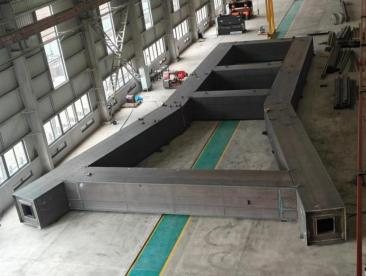
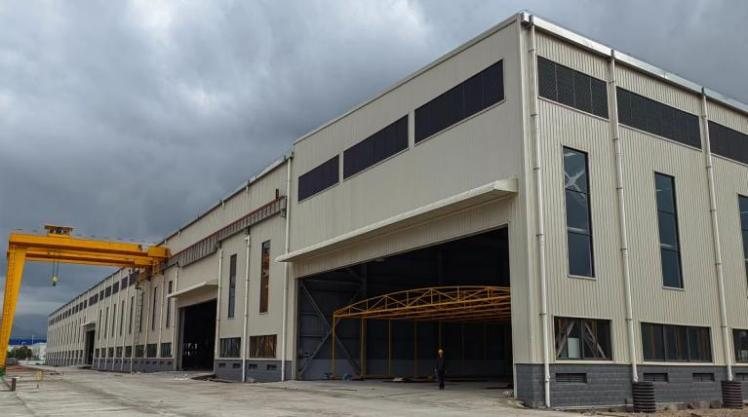
Exterior of the Genhong steel structure manufacturing base in Shanghang County, Fujian

Facilities

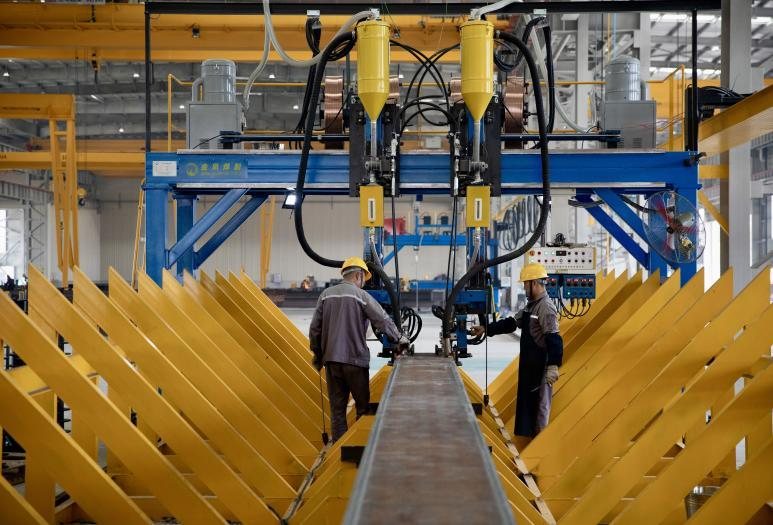
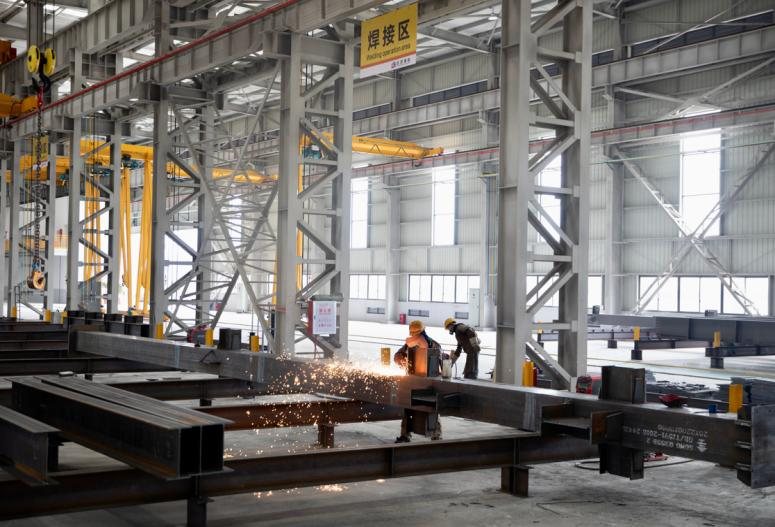
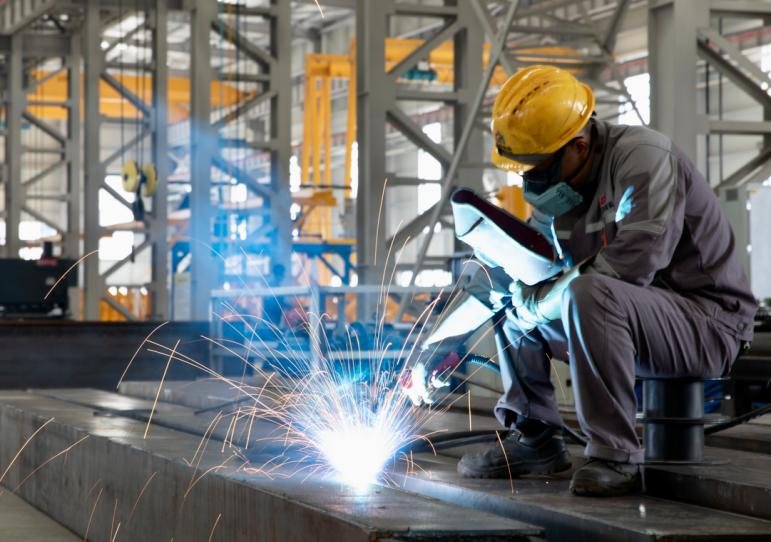
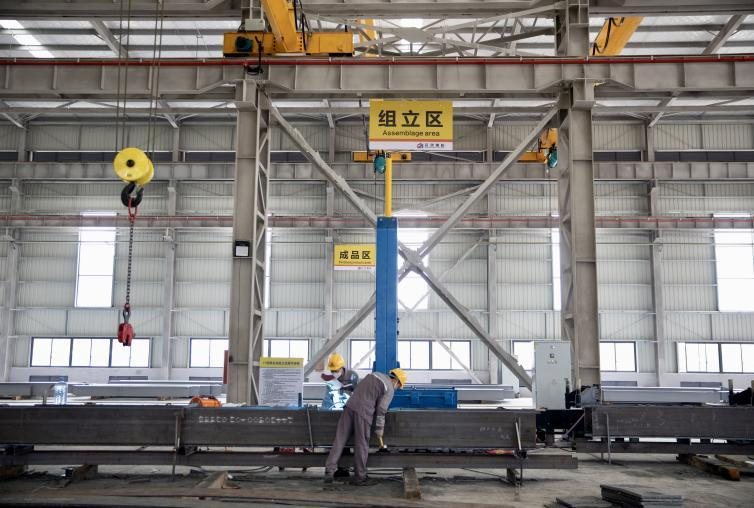
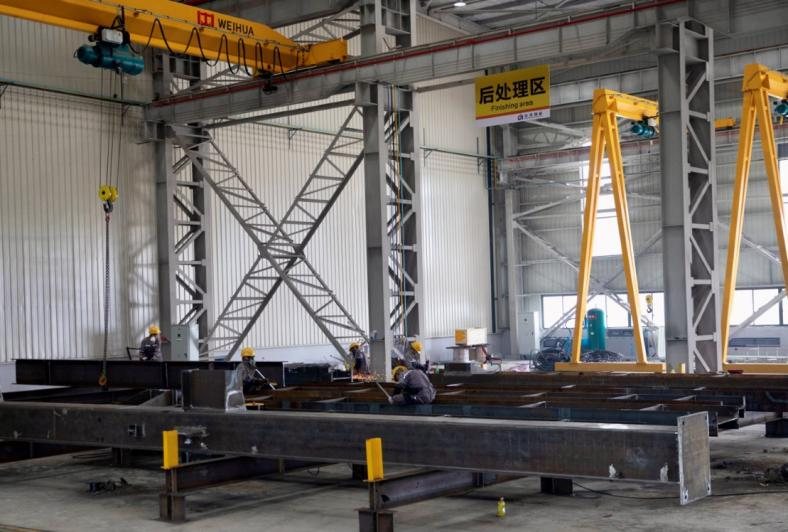
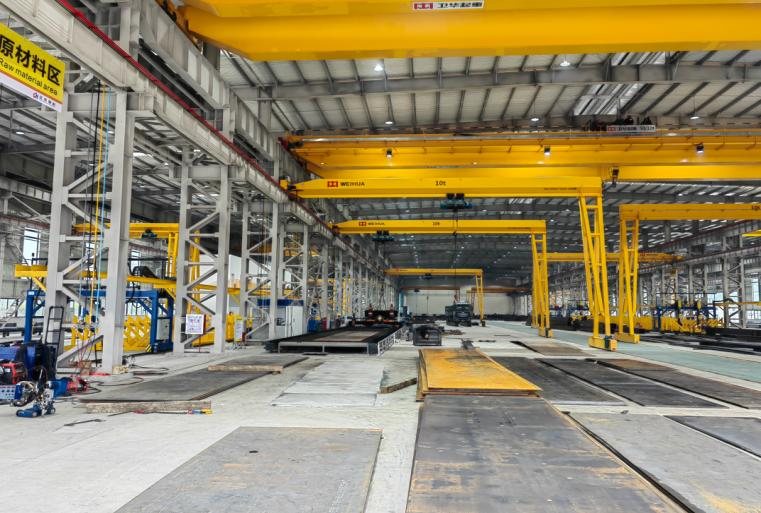
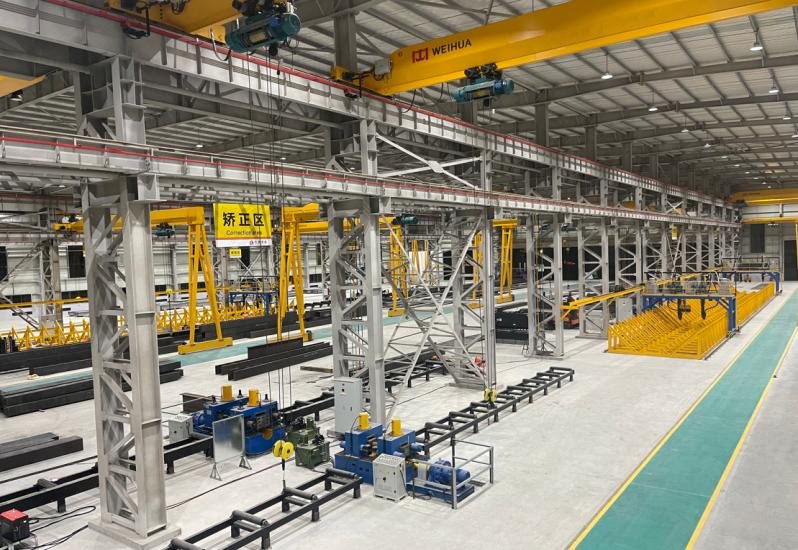
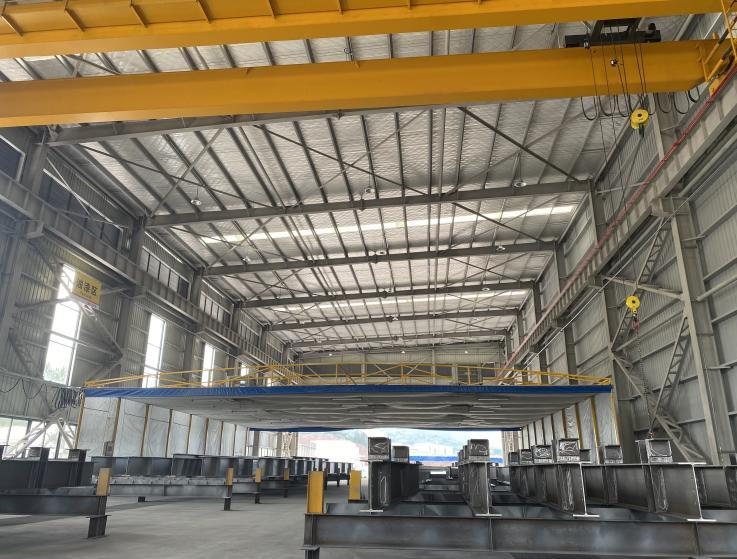
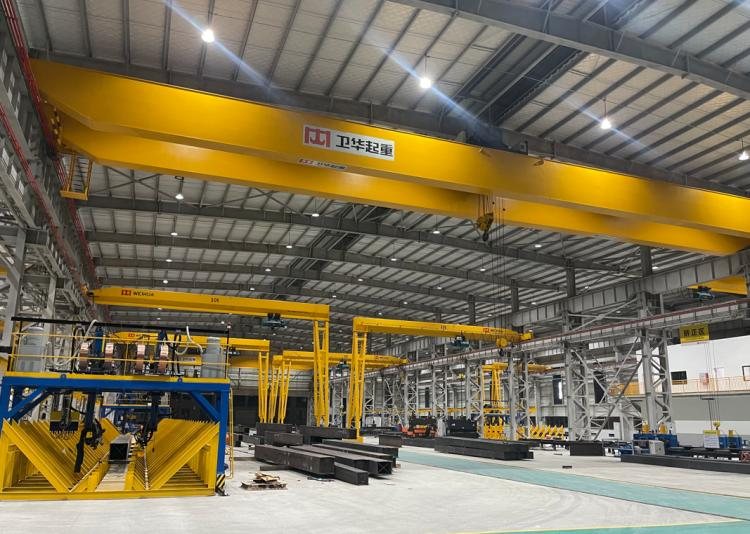
Inside our steel fabrication plant

One 18,804 m² workshop building with a clear span of 37.2 m, three production lines and more than 40 overhead travelling cranes rated up to 50 t. Plate cutting, CNC drilling, end milling, assembly, welding, shot blasting, coating, trial assembly and export packing all happen under this one roof — nothing is sent out to a subcontractor.

The plant

One building, one span, every process

This is the difference between quoting a structure and being able to build it. Everything the job needs is under one roof, run by one quality system, on one production plan.

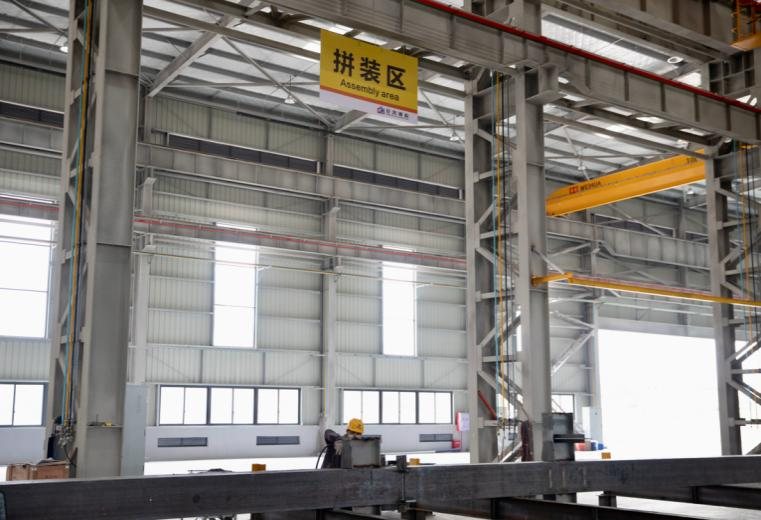
Our manufacturing base is in Longxiang, Shanghang County, Longyan, Fujian, and has been in production since 2023. It is a single intelligent assembly-type steel structure workshop building covering 18,804 m² with a clear span of 37.2 m — the width that lets us build, turn and move long girders and heavy frames without breaking them down into pieces simply to get them across the shop floor.

Three production lines run inside it: one dedicated to heavy steel, two to light steel, served by more than 40 overhead travelling cranes rated at up to 50 t. Because the plant is laid out as one straight flow — plate storage, cutting, drilling, end milling, assembly, welding, blasting, coating, trial assembly and loading — a member does not leave the building until it is finished, inspected and packed.

  • 18,804m² main workshop building
  • 37.2 mMaximum single span
  • 40+Overhead cranes, up to 50 t
  • 50,000 tAnnual steel structure capacity

Every number on this page is checkable. We welcome factory visits and third-party inspection at any stage — before you place the order, while your steel is on the line, or before the container is sealed. Tell us your dates and what you want to see and we will put a programme together.

Production flow

How a package moves through the plant

Eight stages, one building, no handovers to third parties. Here is what happens to your steel between arrival and loading.

  1. 01

    Material intake & traceability

    Plate and sections arrive with mill certificates. Heat numbers are recorded and marked onto the material so the steel in your structure can be traced back to the mill it came from.

  2. 02

    Cutting

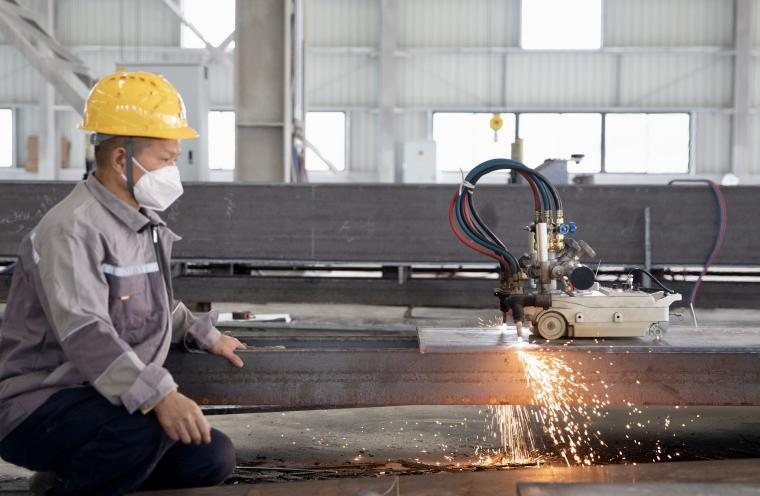
    Numerically controlled and flame cutting stations profile plates and sections from the nesting plan. Every piece is marked with its member number before it moves to the next station.

  3. 03

    Drilling & end milling

    CNC drilling reproduces the same bolt-hole pattern across a whole batch, and beam ends are milled square on the end milling line, so members arrive on site ready to fit.

  4. 04

    Assembly & fit-up

    Web and flange plates are set and held on automated assembly machines and jigs, with stiffeners, diaphragms, gussets and base plates positioned against the drawing before welding starts.

  5. 05

    Welding

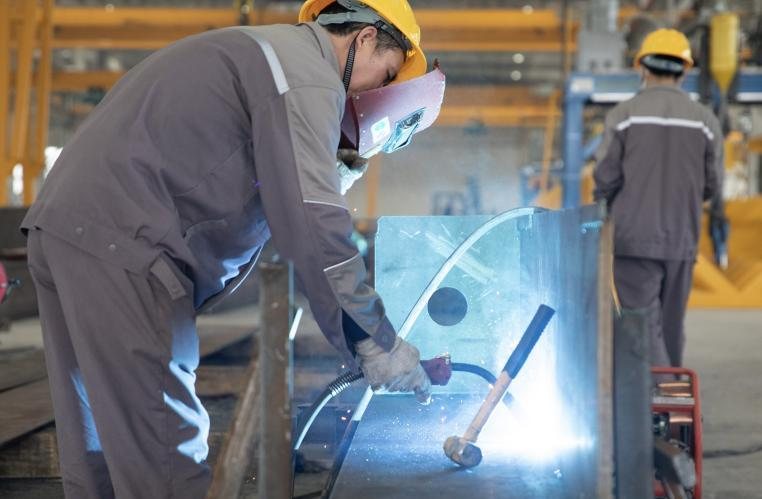
    Submerged arc for long repetitive seams; gas metal arc, flux-cored and manual arc for connections and site splices — carried out by qualified welders to procedures agreed for your project.

  6. 06

    Shot blasting & coating

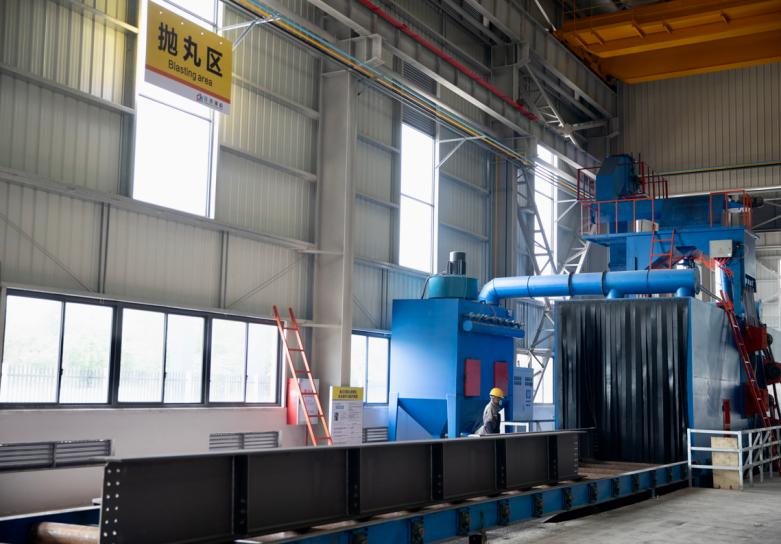
    Members pass through the shot blasting area to reach the surface preparation grade you specify, then into priming and the full coating system, with dry film thickness measured and recorded.

  7. 07

    Trial assembly

    Where the drawings call for it, structures are trial-assembled at full scale so interfaces, bolt holes and camber are proven on the ground rather than discovered on your site.

  8. 08

    Marking, packing & loading

    Members are marked, bundled and racked to suit container or breakbulk loading, with packing lists and shipping documents prepared before the truck leaves the gate.

Machinery & production areas

What the plant is equipped to do

Six areas, in the order your steel moves through them. Photographs are of our own plant in Shanghang — not a stock library.

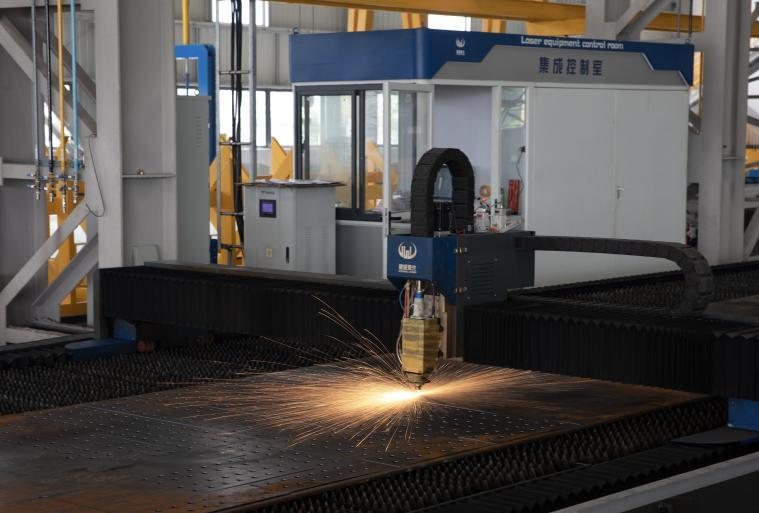
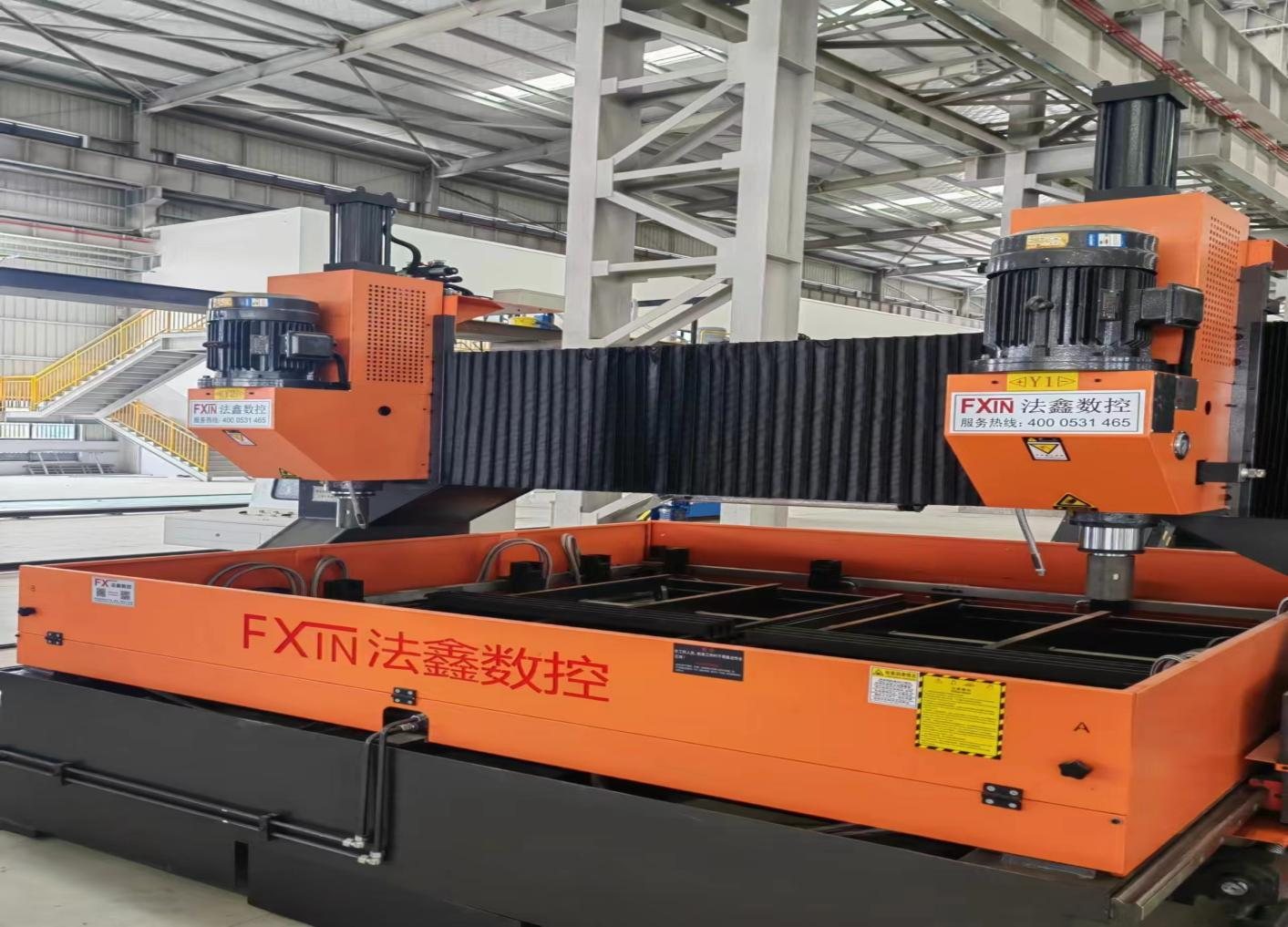
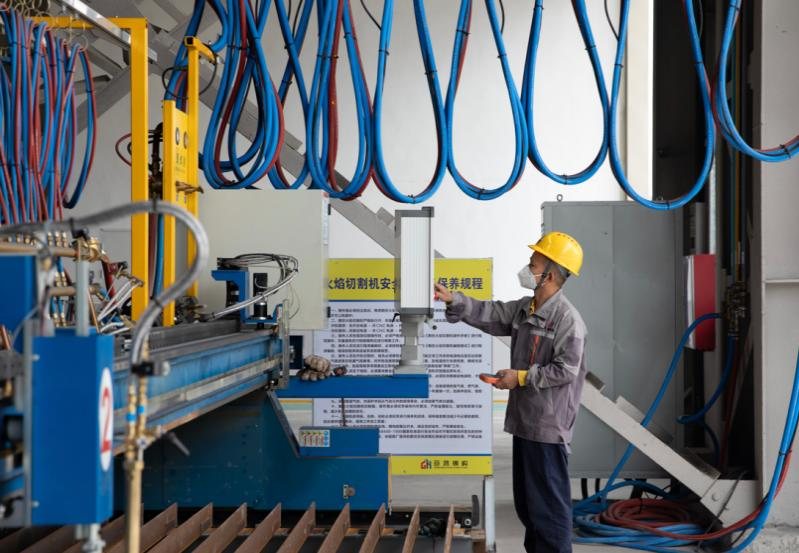
Numerically controlled cutting machine profiling a steel plate beside the control room CNC plate drilling machine producing bolt hole patterns in a steel plate Flame cutting station in the workshop with gas hoses and cutting machine

01 — Cutting & drilling

Plate cutting and CNC drilling

Plates are profiled on numerically controlled cutting machines and at flame cutting stations, working from a nesting plan rather than from hand marking. Drilling runs on CNC lines that put the same hole pattern into every piece in a batch.

That repetition is what makes a large frame assemble quickly on site: hole positions, edge distances and member lengths come off the same programme, so pieces that should fit together do fit together.

Typical work

  • Web & flange plates
  • Gussets & stiffeners
  • Base & end plates
  • Bolt-hole patterns
  • Profiled & nested plates
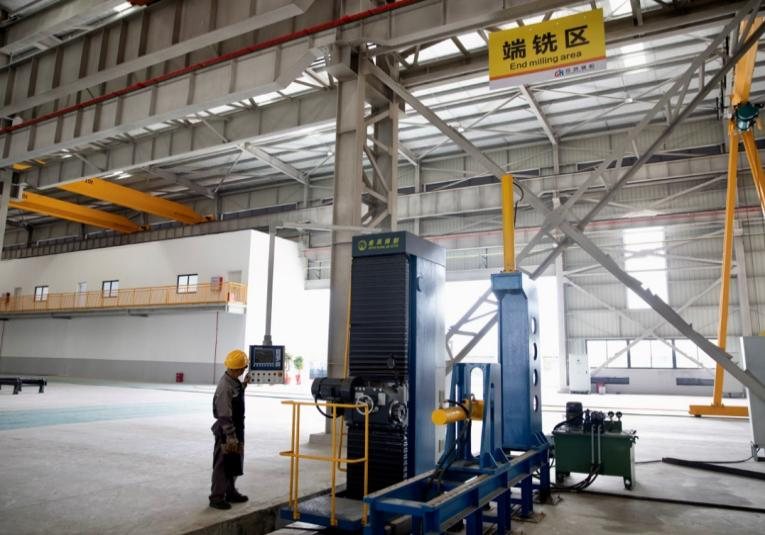
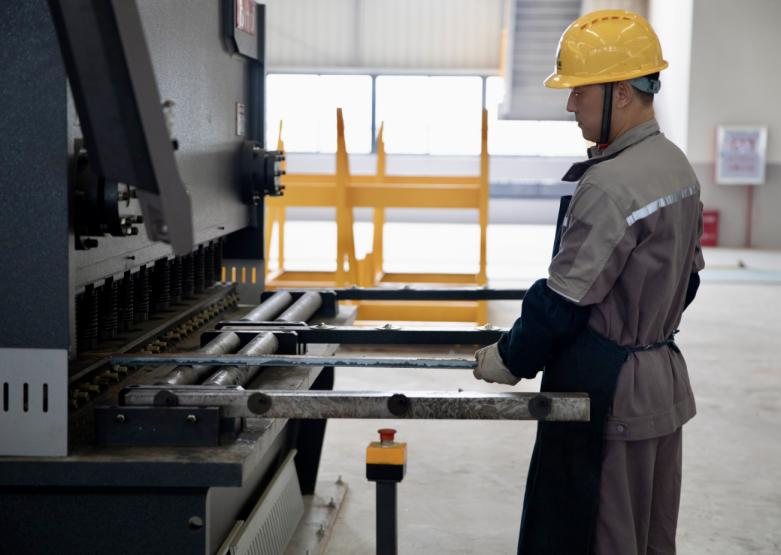
Beam end milling machine squaring the end of a fabricated steel section Operator feeding a steel section through a section processing machine Numerically controlled section processing machine with its control panel

02 — End milling & section processing

Beam end milling and section finishing

Beam and column ends are milled square to length in the end milling area, so a member arrives on site ready to butt against its neighbour rather than needing to be dressed by hand in the air. Section cutting, coping and hole-making are handled on the same lines.

Because the ends are machined rather than flame-cut, contact faces for full-penetration butt joints are flat and square — which matters most on long-span girders and on columns carrying heavy axial load.

Typical work

  • Beam & column ends
  • Butt joint contact faces
  • Coping & notching
  • Section cutting to length
  • Splice preparation
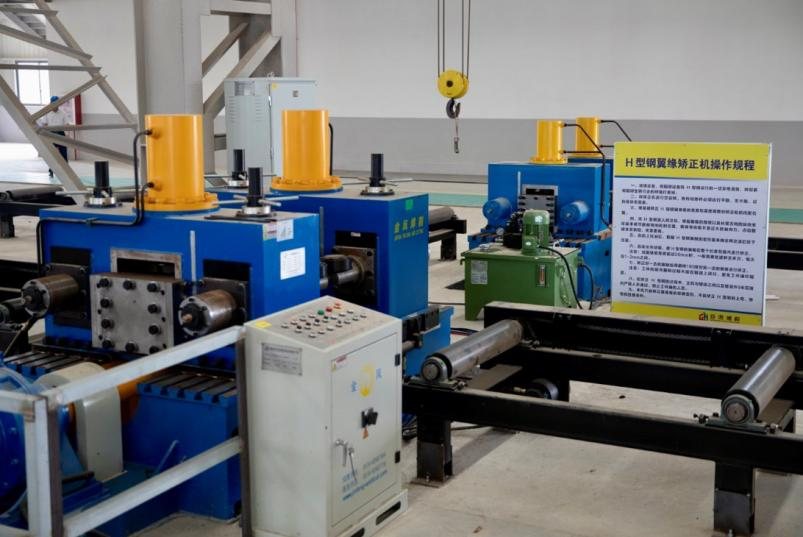
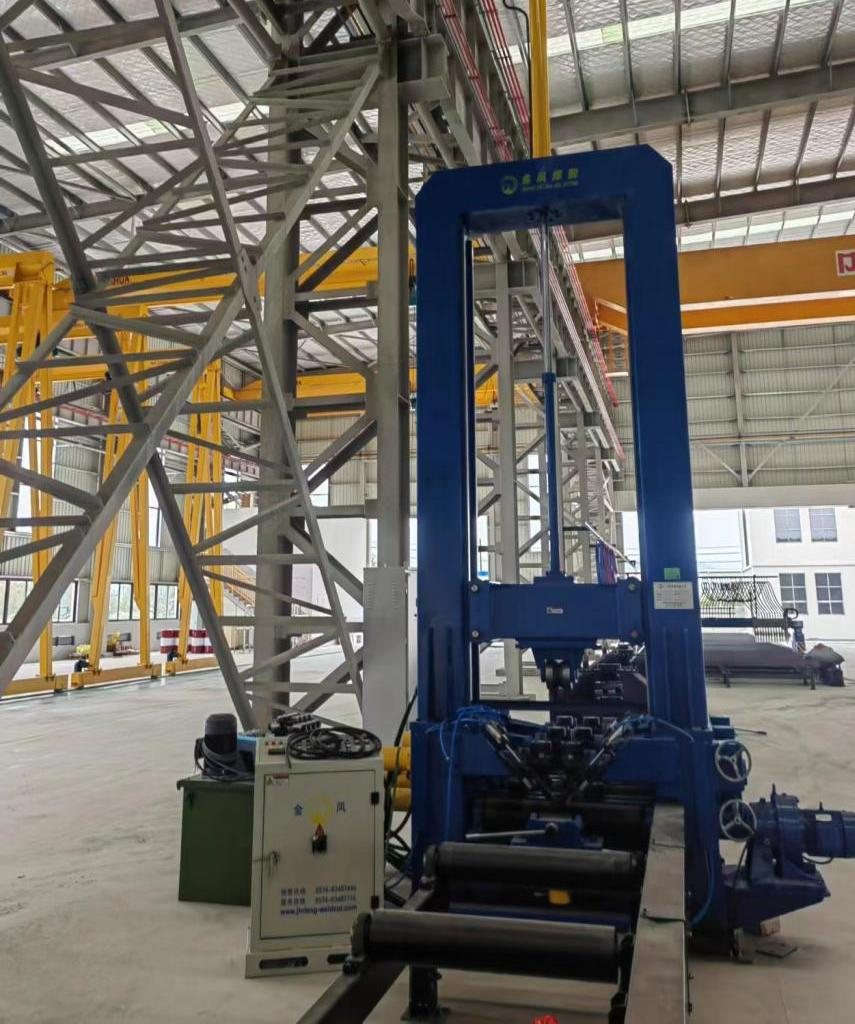
Automatic H-beam assembly machine setting web and flange plates in position Assembly jigs holding long steel members during fit-up Fit-up and assembly area with operators preparing steel members

03 — Assembly & fit-up

Assembly and fit-up of welded sections

Built-up H-sections start on the automatic assembly machine, which sets the web and flange plates and holds them in position while tacking begins — so the section is straight before a single production weld is laid. Larger and more complex work moves to the fit-up and assembly areas.

There, stiffeners, diaphragms, gussets and base plates are positioned against the drawing, and sub-assemblies are put together before they are welded out. Anything that will be awkward to reach on site is assembled here, where the crane and the jigs are.

Typical work

  • Built-up H-beams
  • Plate girders
  • Box sections
  • Stiffened columns
  • Sub-assemblies & frames
Welder producing a full-penetration weld on a fabricated steel member Assembly and welding area beneath an overhead travelling crane Welder working on a fabricated steel component in the workshop

04 — Welding

Welding and weld inspection

Welding is carried out by qualified welders working to procedures agreed for the project. Long, repetitive seams run under submerged arc welding; connections, gussets and site splices are welded with gas metal arc, flux-cored or manual arc.

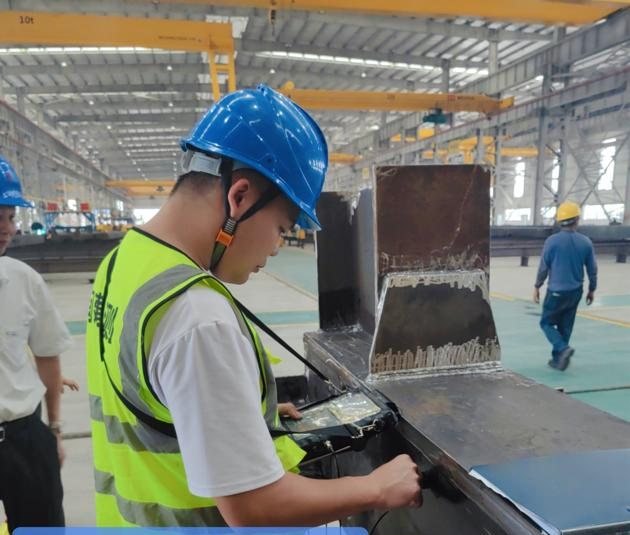
Inspection follows the plan you agree with us: visual examination as standard, with non-destructive testing where your specification calls for it, and weld records that travel with the shipment.

Processes & inspection

  • Submerged arc (SAW)
  • Gas metal arc (GMAW)
  • Flux-cored (FCAW)
  • Manual arc (SMAW)
  • Visual & NDT inspection
Shot blasting area with the blasting machine and extraction ducting Operator preparing the edge of a steel plate with a grinder before finishing Inspector checking a fabricated component against the drawing in the workshop

05 — Surface preparation & coating

Shot blasting and painting

Members pass through a dedicated shot blasting area to reach the surface preparation grade named in your specification, then move into priming and the full coating system. Surface cleanliness, profile and dry film thickness are checked and recorded as the coats go on.

Paint colours are matched to RAL or to your own colour code, and hot-dip galvanizing is arranged to specification where the exposure or the maintenance regime calls for it. Coating system and final thickness are documented before packing.

Surface treatment

  • Shot blasting Sa 2.0 / Sa 2.5
  • Zinc-rich primer
  • Epoxy intermediate
  • Polyurethane topcoat
  • Hot-dip galvanizing
Full-scale trial assembly of a fabricated steel frame on the workshop floor Steel frame erected inside the workshop during trial assembly Fabricated steel members staged in the bay before dispatch

06 — Trial assembly & loading

Trial assembly, packing and loading

For export packages we trial-assemble the structure at full scale. Interfaces, bolt holes and camber are checked on the ground while the crane is still available and the fixings are still ours to adjust — so problems are solved in our yard, not on your site in front of your client.

Members are then marked, bundled and racked to suit container or breakbulk shipment, with packing lists and shipping documentation prepared before the truck leaves. Loading plans are worked out with the freight forwarder so that what arrives is in the order your erection crew wants it.

Export preparation

  • Full-scale trial assembly
  • Member marking & bundling
  • Racking for containers
  • Loading plans
  • Shipping documentation

Come and look

Visit the plant, or ask us for proof

Buyers and their engineers visit us regularly, and we can also walk you through the works on a live video call if travelling is not practical. Ask for a specific area, an equipment list or a quality record and we will send it rather than describe it.